Leadership Training for International Managers in the Netherlands
Practical leadership training in the Netherlands for managers who lead Dutch and international teams. We help managers understand their own leadership style and how Dutch work culture and employment law shape their day-to-day decisions.
Updated
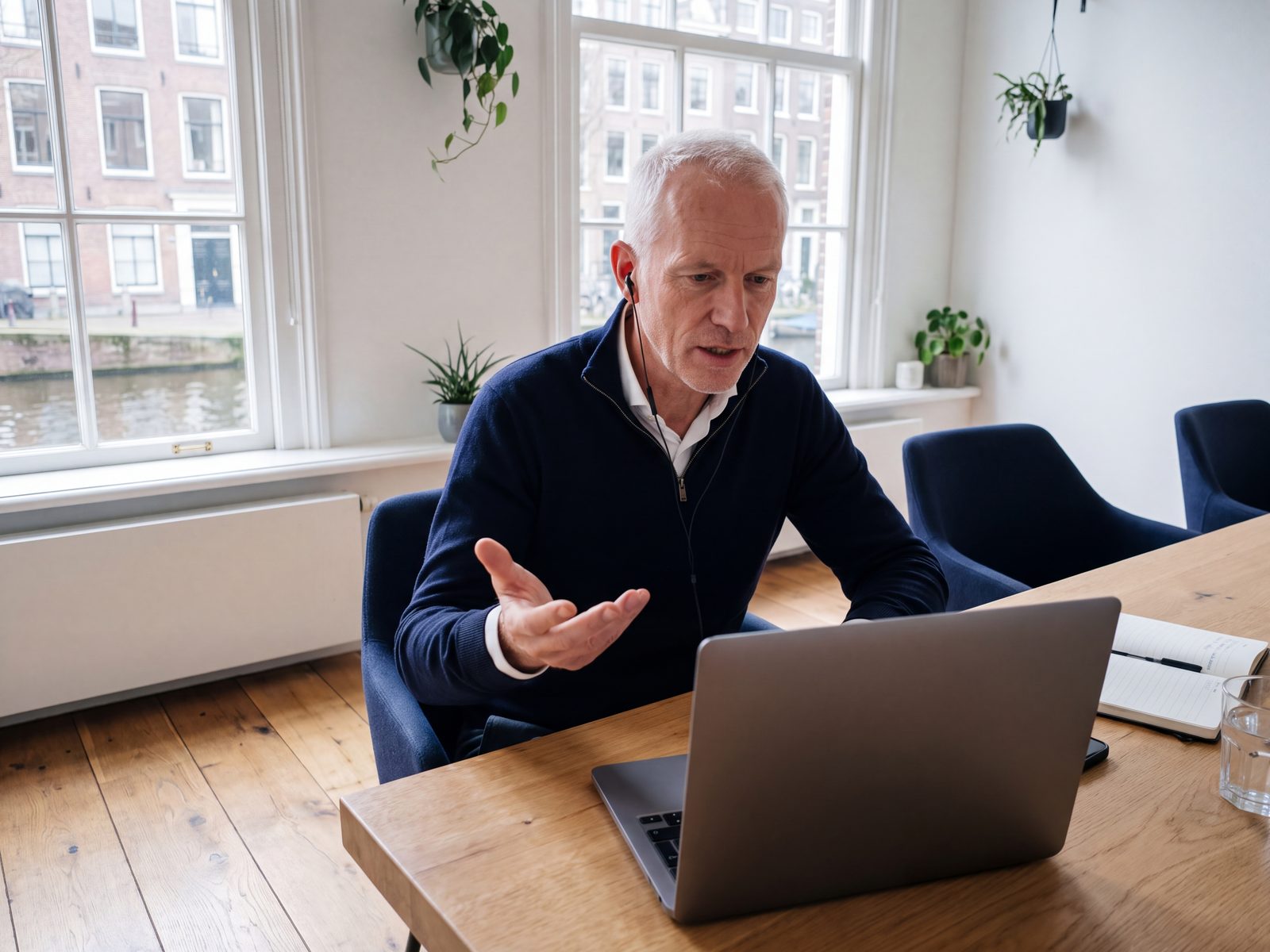
Good managers abroad can struggle in a Dutch workplace
Many international managers arrive in the Netherlands with a strong track record and still find their teams hard to read. Dutch colleagues give direct feedback, question decisions openly and expect to be consulted before a plan is final. What feels like a challenge to authority is often normal engagement in a flat hierarchy, and misreading it damages trust quickly.
The legal side is just as unfamiliar. In the Netherlands, line managers carry real responsibilities: following the Gatekeeper Act when an employee is sick, documenting performance problems properly, respecting working hours and leave rules, and knowing when the works council has a say. Managers who learned employment practice elsewhere often assume rules that simply do not apply here.
The cost shows up later. A dismissal fails because there is no dossier, a sickness case runs for two years without the required steps, or a talented team member leaves after feedback that landed badly. These problems are rarely about intent. They come from managers who were never shown how Dutch working culture and Dutch employment law fit together.
See the case study
- 104 weeks
- of salary continuation during sickness, a period managers must actively manage under the Gatekeeper Act
- Week 6
- deadline for the occupational physician's problem analysis in a sickness absence case
- 50 employees
- the threshold at which a company must set up a works council
- 4x weekly hours
- the statutory minimum of paid holiday each year under Dutch law
Dutch work culture for managers: directness, overleg and a flat hierarchy
Managing Dutch employees usually means earning authority rather than assuming it. In many Dutch organisations the manager is seen as first among equals: someone who coordinates, coaches and removes obstacles rather than issuing instructions. People speak up in meetings and give feedback upwards as readily as downwards. That directness is meant to be efficient, not hostile, and works best when the manager is equally clear in return.
Decisions often take shape through overleg: consulting the people affected before a plan is final. The habit is linked to the polder model, the Dutch tradition of reaching agreement through dialogue between employers, unions and government. For managers, it means more conversations before a decision and fewer surprises after it. Work-life balance matters too: part-time work is widespread, and availability outside working hours should be agreed rather than assumed.
Employment law for managers: the responsibilities that sit with you
The line manager is often the first contact when an employee calls in sick. The Gatekeeper Act (Wet verbetering poortwachter) requires employer and employee to work actively towards a return to work, with fixed steps such as the occupational physician's problem analysis by week 6 and a plan of action by week 8. Managers may not ask about the diagnosis, and missed steps can lead UWV to extend salary payment by up to 52 weeks.
Performance management depends on managers just as much. A dismissal for poor performance only succeeds if the employee knew what was expected, was told in good time that their work fell short and had a genuine chance to improve, usually through a documented improvement plan. That file is built in everyday conversations and written follow-ups, so postponing difficult feedback leaves the company without the evidence a court will ask for.
- Works council: mandatory from 50 employees; its consent is generally needed for rules on working hours, staff appraisal and sickness absence.
- Working hours and leave: the Working Hours Act caps working time and sets minimum rest, and statutory holiday is at least four times weekly hours.
- Discrimination and harassment: equal treatment law covers hiring, pay, promotion and dismissal, and employers must have a policy on psychosocial workload, including bullying, harassment and work pressure.
Intercultural leadership training that starts with your own style
HRhelp's programmes start from a simple principle: culture is not a list of national stereotypes. Sessions often begin with each participant's own leadership style and its cultural roots, because managers who understand their own defaults adapt more easily. The work then moves to real situations from your organisation and to psychological safety: a team climate where people can raise differences, mistakes and disagreement without fear of judgement.
The format follows the goal. A workshop suits a group that needs a shared understanding of one topic, such as feedback across cultures or the manager's role in sickness absence. A management development programme spreads sessions over a longer period, so managers can practise in between. One-to-one coaching fits a single manager in a new role or a new country, on its own or alongside a group programme.
Onboarding international managers in their first months in the Netherlands
A manager who relocates to the Netherlands usually brings strong expertise and little local context. In the first weeks they meet a team with its own habits and employment rules that differ from those at home, often while their family is still settling in. Without a structured introduction they learn by trial and error, and the first sickness case or difficult conversation becomes their training.
Good onboarding connects culture, law and your own HR processes: how the team expects to be consulted, what to do when someone calls in sick, the collective labour agreement if one applies and when the works council has a say. HRhelp can run it as a few sessions or as coaching in the first months, with HR involved so the answers match your policies.
How a programme runs, from intake to follow-up
The exact schedule depends on the format and is confirmed in the proposal.
| When | What | Who |
|---|---|---|
| Week 1 | Intake on your teams, policies and the situations managers find hardest | HR, leadership and HRhelp; some managers where useful |
| Week 2 | Proposal with format, agenda, schedule and fixed price | HRhelp, agreed with HR |
| Agreed schedule | Sessions with discussion, role play and case work | Senior HR practitioners and your managers |
| Between sessions | Managers apply the learning to live cases | Managers, supported by HRhelp |
| After delivery | Evaluation of what worked and remaining gaps, plus optional follow-up coaching or a refresher | HR, leadership and HRhelp |
Training built around your managers and your company
-
Intake and needs analysis
We talk with HR and leadership about your teams, the nationalities involved and the situations managers find hardest. Where useful, we speak with some of the managers themselves, so the programme reflects real issues rather than generic theory.
-
Programme design
We propose a format and agenda: workshops, a longer development programme, individual coaching or a combination. Content is built from your own policies, collective agreement where relevant and practical cases from your organisation, and we agree the scope and fixed price upfront.
-
Delivery by senior HR practitioners
Sessions are led by experienced HR professionals who handle these situations in practice. Expect discussion, role play and case work on feedback, consensus building, sickness absence and performance conversations rather than slides and lectures.
-
Practice on real cases
Managers apply what they learn to situations they are facing now, such as a difficult conversation or a performance issue that needs documenting. We help them prepare and reflect afterwards, so the learning sticks in daily work.
-
Review and follow-up
We close with an evaluation with HR and leadership: what worked, which gaps remain and where policies or processes could support managers better. Follow-up coaching or refresher sessions can be added if needed.
Modules you can combine into one programme
Leading in Dutch work culture
Dutch directness, the polder model and consensus-based decision making, flat hierarchy and feedback culture, and how to lead mixed Dutch and international teams without losing authority or trust.
Employment law for managers
Compliance training on what managers must know: sickness absence and the Gatekeeper Act, working hours and leave, the role of the works council, and when to involve HR or legal advice.
Performance management and dossier building
How to set clear expectations, document performance issues, offer a fair improvement plan and build the file that Dutch law requires before a dismissal on performance grounds can succeed.
Difficult conversations
Practical preparation for conversations about performance, absence, conflict, reorganisation or bad news, with role play that reflects how Dutch and international employees tend to respond.
Onboarding international managers
A structured introduction for managers newly arrived in the Netherlands, covering local working culture, legal responsibilities and your company's HR processes, so they can lead confidently from the start.
One-to-one coaching
Individual coaching for new or newly relocated managers, focused on their own team and real situations, as a standalone service or alongside a workshop or management development programme.
Ongoing HR support for the managers you train
After a programme, some situations still need an experienced HR professional at a manager's side. These HRhelp solutions and services provide that support.
Solutions
HR Teams
Your outsourced HR department
A dedicated senior HR manager for your Netherlands operation, so the managers you train have an HR partner for contracts, performance reviews and everyday people questions.
HR Settlers
Enter the Dutch market with confidence
For companies setting up in the Netherlands: contracts, policies and the full HR setup, plus workshops that prepare international management for what Dutch employees expect.
Services
Fractional HR Manager
Your HR lead, part of the week
A part-time HR manager who owns your Dutch HR function on fixed days and coaches line managers through underperformance conversations, sickness reporting and probation decisions.
Interim HR Advisor
Senior Dutch HR counsel on call
Senior Dutch HR and employment law counsel on call, so managers can test a performance case, contract renewal or sensitive exit with one named consultant before acting.
Common mistakes international managers make in the Netherlands
Deciding first, consulting afterwards
Presenting a finished plan and then asking for input feels like a formality to many Dutch employees. Consult the people affected while the decision can still change; it takes longer at first but builds real support.
Asking a sick employee what is wrong
Managers in the Netherlands may not ask about the nature or cause of an illness; that belongs with the occupational physician. Ask about expected duration and urgent work instead, and make sure the Gatekeeper Act steps happen on time.
Giving feedback without writing it down
Many performance problems are discussed but never recorded. When dismissal becomes an option, nothing shows that the employee knew what was expected and had a fair chance to improve. A short written follow-up after each conversation prevents this.
Assuming home-country dismissal rules apply
Dutch law has no at-will employment. Ending a permanent contract usually requires a reasonable ground and, unless the employee agrees, approval from UWV or the subdistrict court. Promising head office a quick exit creates false expectations and legal risk.
For organisations whose managers lead across cultures
- International companies with a Dutch entity and managers from abroad
- Managers newly relocated to the Netherlands
- Dutch managers leading international teams
- Team leads promoted into their first management role
- Growing companies building a management layer for the first time
- HR teams that want managers to handle more people issues themselves
A fixed price per programme, agreed upfront
Every training programme is priced as a fixed amount, based on the format, the number of participants and the sessions involved. We agree the scope and price before we start, so there are no hourly surprises. Need a single workshop, a full management development programme or individual coaching? We will propose the option that fits your goals and budget.
Book a Free ConsultationDutch workplace terms every manager should know
- Overleg (consultation)
- Consulting the people involved before deciding; a werkoverleg is a regular team meeting.
- Polderen (consensus building)
- Reaching agreement through dialogue and compromise, named after the Dutch poldermodel.
- Ondernemingsraad (works council)
- Elected employee body, mandatory from 50 employees, with rights to information, advice and consent.
- Functioneringsgesprek (performance conversation)
- Two-way conversation about work, development and support, usually without a formal rating.
- Beoordelingsgesprek (appraisal interview)
- The manager's formal assessment of performance, often linked to pay or promotion.
- Dossieropbouw (building a file)
- Recording feedback, agreements and incidents over time so decisions hold up if challenged.
- Verzuim (sickness absence)
- Absence through illness, managed actively by employer and employee under the Gatekeeper Act.
- Bedrijfsarts (occupational physician)
- Doctor who advises employer and employee on fitness for work; medical details stay confidential.
- CAO (collective labour agreement)
- Agreement between employers and unions on pay and conditions, sometimes binding sector-wide.
Is the training delivered in English?
Yes. Most of our participants work in international teams, so sessions are usually delivered in English. Training in Dutch is also possible for teams where that works better. We discuss the language during the intake, together with the mix of nationalities in the group, so that everyone can take part fully and the examples feel relevant.
Do you only offer in-company training?
Our training is designed for one organisation at a time. We offer in-company workshops, longer management development programmes and one-to-one coaching for individual managers. Because every programme is built around your own teams, policies and cases, we do not run generic open courses. That keeps the content practical and directly usable in your workplace.
How much employment law do managers really need to know?
Managers do not need to become lawyers, but they do need to know their own responsibilities. That means understanding the steps of the Gatekeeper Act during sickness, documenting performance issues properly, respecting working hours and leave rules, and recognising when the works council or HR must be involved. We focus on what managers actually do, not on legal theory.
How should an international manager give feedback to Dutch employees?
Be specific, timely and honest, and explain the reasoning behind your view. Dutch employees generally prefer a clear message to a softened one, and many will answer just as directly; that is part of the conversation, not a challenge to your authority. Ask for their perspective and agree next steps. For performance concerns, confirm the conversation in writing for the employee's file.
Can you tailor the training to our company?
Yes, that is the starting point. During the intake we look at your organisation, your policies, any collective labour agreement that applies and the situations your managers find hardest. We then build the programme around those cases, so participants practise with realistic scenarios rather than textbook examples from another country or industry.
Who delivers the training?
Sessions are delivered by senior HR practitioners with hands-on experience of Dutch employment practice and international teams. They deal with sickness absence, performance issues, dismissals and works council matters in their daily work, which means they can answer practical questions from managers and give examples from real situations rather than theory.
Is the training only for managers who come from abroad?
No. Dutch managers who lead international teams face the mirror image of the same challenge: a direct style or a habit of consensus can confuse colleagues used to more hierarchy or more indirect communication. We also work with first-time team leads and with HR teams that want managers to handle more people issues themselves.
Can a single new manager get coaching rather than a group workshop?
Yes. One-to-one coaching works well for a manager who has just relocated to the Netherlands or has stepped into a first management role. We agree a number of sessions in advance and focus on the manager's own team and current challenges, such as giving feedback, handling a sickness case or preparing a difficult conversation.
Ready to Get Started?
Let's discuss what this could look like for your organisation.